



05 May What affect will ‘Payday Super’ have on your hospitality business’s cashflow?
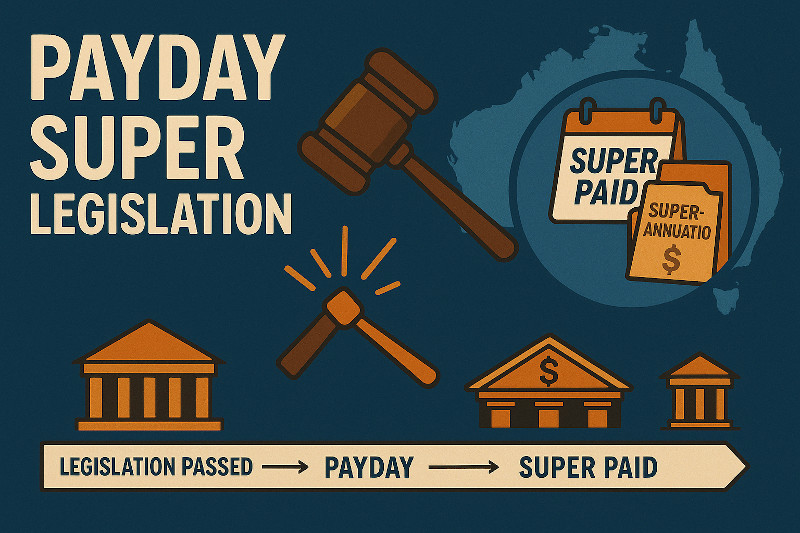
The shift to “payday super” — where superannuation is paid at the same time as wages rather than quarterly — is being framed by some as a significant cashflow change for hospitality businesses. In reality, for operators already managing their numbers properly, it shouldn’t materially move the needle.
The key comes down to whether you’re already accounting for wage “on-costs” in real time.
On-costs typically include superannuation, leave entitlements, payroll tax, and WorkCover premiums. Well-run businesses don’t treat these as occasional or delayed expenses — they recognise them as part of the true cost of labour from the moment a shift is worked. That means every roster decision is made with a fully loaded labour cost in mind, not just the base hourly rate.
If you’re already operating this way, payday super is simply a timing shift. Cash that would have sat in your account until the quarterly super payment is now leaving earlier, but it was never truly “available” cash to begin with. It was always a liability.
Where some may feel pressure is if they’ve been relying — consciously or not — on that quarterly lag as a form of short-term cashflow support. Moving to payday super removes that buffer. For those operators, the change may expose underlying weaknesses in cashflow management, budgeting, or rostering discipline.
The practical takeaway is straightforward: if you’re not already doing so, start calculating and applying an on-cost percentage to every wage dollar in your business. Build it into your rostering, your budgeting, and your pricing decisions.
Done properly, payday super becomes largely administrative — not financial.